
fbpx

The Importance of Vision

May 8, 2026Inline Text admin

Live the Vision or Pay the Bills

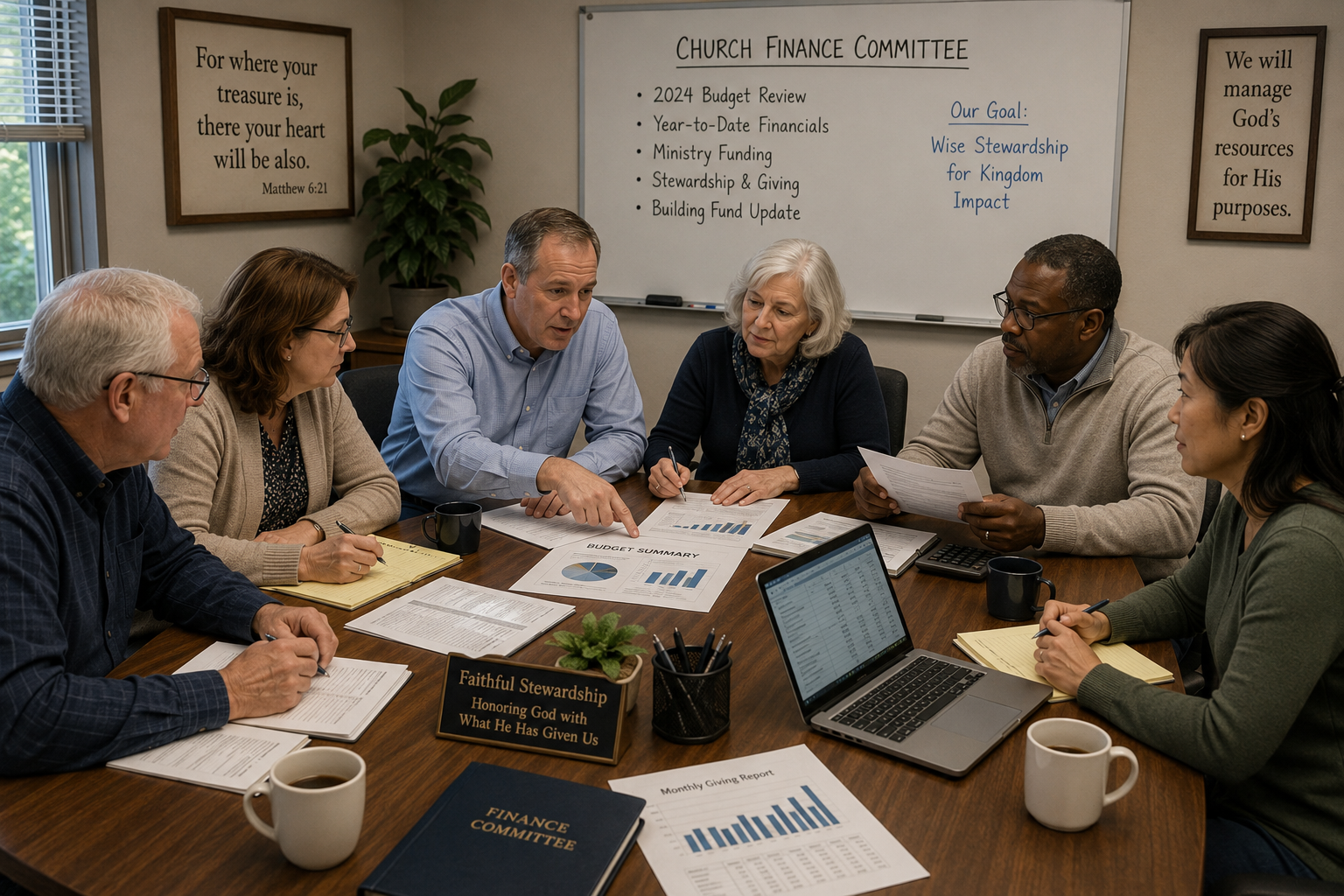
Some years ago, Christian Smith and Micheal Emerson with Paricia Snell wrote a wonderful book, Passing the Plate about giving to churches in the United States. One concept has stayed with me. They wrote that there are two types of churches where money is concerned. One is a Live the Vision church and the other is a Pay the Bills church.

 A Pay the Bills church is often struggling for money. You most probably all have seen this type of church at some stage. Here the treasurer (rather than the pastor) is the person who stands and informs the congregation that the finances are behind budget. A common refrain is that and all it will take is for everybody to put in the equivalent of a cup of coffee so the church can escape the current financial hole. The Pay the Bills church will rarely expand ministry or buildings because it never has enough money because the current bills are always too much. Then you may have seen the treasurer stand up and tell everyone that unless the giving goes up by ‘x’ amount certain programmes will have to be cut back or staff made redundant. I have attended such a church on holidays and heard precisely that type of announcement. But more depressing was the fact that I attended two years later and heard the treasurer make exactly the same sort of presentation. It was just all very depressing.

By contrast there is another church I know very well. This church has a slogan that appears on the screen every week. ‘We are a generous church’. This is not just blowing smoke. It is a generous church because the leadership over many many years has instilled a culture of generosity by biblical preaching, fruitful ministry and presenting, year by year, exciting proposals to support.

The senior minister recently set forth a vision for the church about where, under God, he prays the church will be in the next twelve months. It prioritized prayer, people, planting and evangelism though the word used for evangelism was proselytization to help with the alliteration. However, to make sure it was not a motherhood statement he announced that one of the church campuses was now able to construct their own building after many years meeting in a school. But that was not all. It was now full steam ahead to plant two more satellite campuses.

Will this actually be accomplished? I have confidence that it will, because this church has an admirable track record of being healthy in ministry and doing what it said it would do. In his speech the senior minister was able to announce that a Christmas appeal for a hospital in Uganda had raised $533,000. Yes, that’s right, over half a million dollars! But as they say in the commercial, there’s more. A different campus suddenly last year had the opportunity to purchase the inner-city space it had been renting. An appeal was held in October November, (lead by the senior minister not the treasurer) and $780,000 was raised help make this happen. This figure is even more remarkable as it coincided with the much-loved founding campus pastor accepting a call to a significant church in Melbourne. Normally this would be a serious handicap to such a campaign but so high was the trust of the congregation in the whole church, the money was given anyway.

Yes of course, the financial price tag of this project was laid before the people. But it was not done in the spirit indicating we need money or we will close up shop. It was given in the spirit of we are on an exciting journey helping to spread the name of Jesus and advance the Kingdom of God. Sign up with your hearts and hands and finances.

So be a Live the Vision church. Don’t just Pay the Bills. If you live the vision, the bills generally take care of themselves.

For more on this topic see my book, Giving Generously: Resourcing Local Church Ministry.  https://givinggenerously.com/buy-the-book-2/

The Importance of Vision

March 26, 2026Inline Text admin

Should a Christian still tithe today?

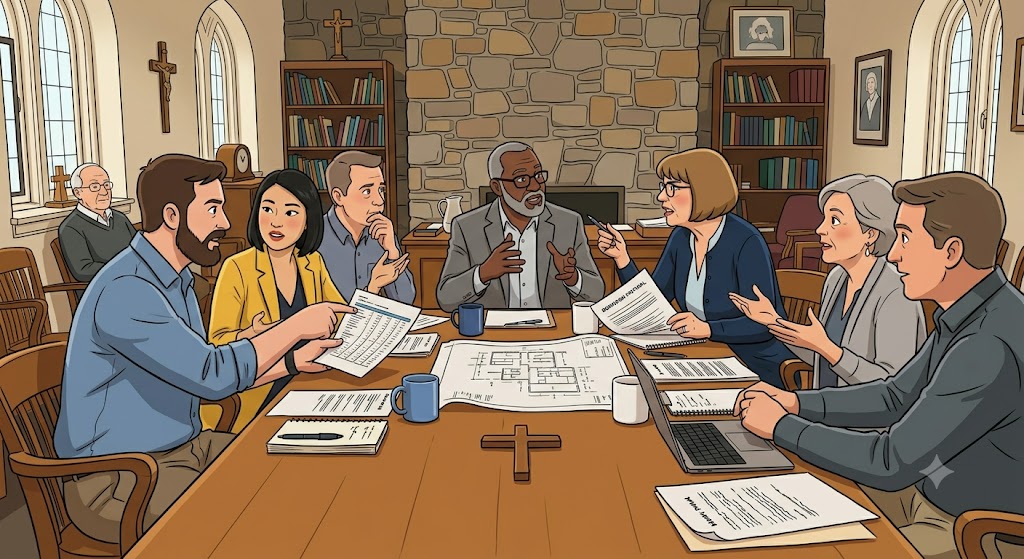
To tithe or not to tithe is still a question that can stir passions among Christians. A central figure in the church history of tithing is the towering figure of probably the greatest monarch of the early Middle Ages, Charlemagne, (Charles the Great) who lived from about 740 to 812 AD and ruled over Europe from the Atlantic Ocean to Hungary and from The Baltic to Northern Italy.

Charlemagne saw himself quite definitely, as a Christian king who desired to enhance Christianity and all its benefits in his realm. Naturally he was a monarch of his day and age. He had a distinct romantic fondness for women that horrified his monks. He threatened conquered peoples with execution if they did not convert and was not averse to carrying out his threat.

The king also was keen to bring education and law and learning into his realm. He could read but not write and he set up a palace school at Aachen and imported some of the great scholars of the day to reside there. One such scholar was Alcuin of York (735-804) who was lured across the North Sea to serve and advise the king. He was called by a contemporary ‘the most learned man anywhere to be found’.

Early in Charles’ reign one of the adjacent unconquered peoples were the Saxons. They were wild and barbarous, living in a vast area of Northern Germany, fierce warriors who could retreat into dense forests and near impenetrable marshes when attacked. Yet Charlemagne ruthlessly prevailed over them. He then set about the task of building towns, and churches and setting up monasteries with clergy and bishoprics to transform the lives and values of the people.

To do this he needed money and with good intentions he promulgated legislation, (capitularies) enforcing the tithe. Here everyone ‘shall pay the tithes of their possessions to the churches of God, as had been commanded by God’s law’.  Thus, Charlemagne compelled the tithe and this set in train the practice that would become standard for the rest of the Middle Ages. The significance is that before this, church councils had merely encouraged tithing, here Charlemagne mandated it.

Yet Alcuin advised against this exercise of power. His approach was pastoral. He argued that compelling new believers to pay a tax was far more likely to drive them away from Christ that have them embrace the faith from the heart. His attitude can be seen in a letter to Arno, Bishop of Salzburg (c796):

‘Be a preacher of piety, not an exacter of tithes; for the freshly converted soul is to be fed with the milk of apostolical piety until it grows, strengthens, and becomes strong enough to receive solid food. Tithes it is said, have subverted the faith of the Saxons. Why should we place on the neck of the ignorant a yoke which neither we nor our brethren have been able to bear.’

To Charlemagne he wrote: ‘We know that the tithing of our substance is a very good thing; but it is better to sacrifice the tithe than to lose the faith.’

The differences between the king and the scholar are still instructive. Charlemagne used power and law whereas Alcuin counselled as a pastor and evangelist.

Surely Alcuin, far better understood St Paul than the king.

‘Each one should give what he has desired in his heart to give. Not reluctantly or under compulsion, for God loves a cheerful giver’. 2 Cor 9:7

In churches today, mandating tithing as command can easily irritate the faithful and alienate the inquirer. In my book, Giving Generously I have advocated a way forward in this controversial issue.  No one disputes that Christians should be generous. Yet it is difficult for those of us in rich western nations to be generous if we give less than an Old Testament peasant farmer who would starve if his crops failed, (Malachi 3:6-12). Giving Generously provides a brief overview of tithing throughout Church history. I invite you to have a look at the rest of the story. https://givinggenerously.com/buy-the-book-2/
The Importance of Vision

February 6, 2026Inline Text admin

Marriage, The Christian Way: Building a Christian Marriage

In December 2025 I will have been married to my wife Helen for fifty-four years. But marriage is not a set and forget deal. So, I am always keen to keep learning and growing. Thus, I was delighted to receive a new marriage book entitled Marriage, The Christian Way. Now as a disclaimer, I know the author, Ralph Bowles, very well. It is just fifty years since we both entered Moore Theological College together and wrestled with Greek, Hebrew and an assortment of challenging theological subjects. We were both ordained into the Anglican church and have both served in the Sydney diocese and Brisbane diocese, where we are now retired.

In all those years I have found Ralph a good friend but also a very stimulating one. He is very widely read and thoughtful and desires to convey complex ideas clearly to the people he serves. In fact, I think the only drawback I find in talking to Ralph is that I always find he intrigues me with another three or four books that I find I must read. He keeps finding good new ones faster than I can read them. So, when Ralph writes a book on marriage, I simply know it is not going to be shallow but going to be chock full of stimulating ideas based on firm Christian foundations.

The book is written mainly with Christian couples in mind. Of course, anyone will be helped by reading it but it is so easy as a young Christian couple to enter marriage without knowing what it is all about and what is particularly distinctive about Christian marriage. Thus, Ralph explains what a marriage is: a covenant under God but also what a marriage is for: physical union, godly children and Christian companionship. Many good marriage books simply miss these.

The layout is particularly pleasing as the reader can consume a range of wonderful ideas in bite size chunks. There are thirty-one chapters, but they are quite short and easily digested. At the end of each chapter are questions for discussion that would be ideal for a couple reading the book together. So, it would be great for people leading up to marriage or for those more mature seeking a grease and oil change. It will be extremely helpful for pastors engaged in marriage preparation or small group studies.

One feature that I found helpful was that Ralph finds much inspiration and many illustrations from the Anglican Prayer Book. I certainly urge non-Anglicans not to be put off by this feature. While Anglican services have been modernized in their essence, they all go back to the service produced by the genius of the C16 Archbishop Thomas Cranmer who distilled the bible’s principles on marriage and conveyed them in profound liturgy. Many current non-Anglican services owe their parentage to Cranmer.

Not only does Ralph emphasize the spiritual dimensions of Christian marriage, but there are range of topics covered such as forgiveness and hospitality and marriage repair that don’t immediately spring to mind. Neither does Ralph shy away from more controversial subjects such as divorce and roles, which I scrutinized with great interest. I am sure not everyone will agree with every point, but it is impossible to read these chapters without being stimulated to think and reflect on what your beliefs are.

I read this book, chapter by chapter over a few weeks and in that time, it lay on a small table in my study. One day it caught Helen’s eye, and she suggested we read it and discuss it together. I will be delighted to do so hoping that this old dog, even after fifty -four years can still learn some new tricks. Marriage the Christian Way by Ralph Bowles is available at Amazon. I highly commend it to you.

The Importance of Vision

December 23, 2025Inline Text admin

Would anyone want to go to visit church?

I recently received an enquiry for copies of my book Giving Generously from St James Anglican Church, Gerards Cross in Buckinghamshire UK, just outside the London sprawl and on the road to Oxford. I was somewhat chuffed to receive an international request for a purchase and decided I would look the church up to get a feel for its ministry.

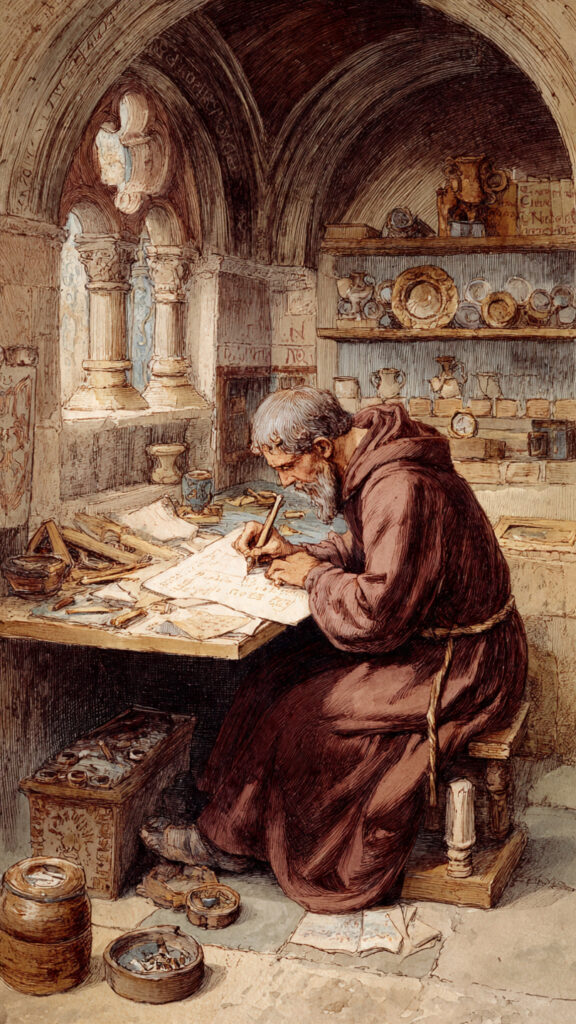
So, I googled St James, Gerards Cross and on the front page immediately found a four-minute video inviting me to explore the church and meet the church team. It is terrific and you can find it here. https://www.saintjames.org.uk/

After catchy opening music, the rector, the Rev Matt Beeby, introduces himself, unpretentiously as Matt, casually dressed in an open necked shirt without a clerical collar. Some may feel this is too informal, but I warmed to him immediately. He is energetic, enthusiastic and welcoming but the most important thing was that he immediately told us about his desire, Jesus and making Him known.

After a few scenes of the town and surrounding country the video moves on to introduce the staff. First there is Ross with a ministry to families and making disciples. Then there is an emphasis on evangelism with Frances organizing courses in Alpha and Christianity Explored. There is Kirsty who understands that her catering is actually a ministry that forms community. The behind the scenes work in the office is highlighted with Mark, Cindy and Tara in operations. I was delighted to hear James the missions minister describe that his role is to help others tell people about Jesus. Kids are not forgotten and Anna the Children’s pastor seems fired up about discipling young people.

Then there is Daff who incorporates people into membership but assures us his real desire is to see people get know the Lord Jesus. There is also the rector Matt’s PA, Rachel, who talked about her role in enabling Matt to be effective but also her personal faith in Jesus. What a great ministry Rachel must be having. When I talk to busy ministers pretty much all of them would love to have a PA but don’t have the finances.

 There is Ben the minister for Maturity, responsible for growth groups. It is apparent that the entire ministry is built around the 5 M framework that many churches have adopted following the lead of Rick Warren of Saddleback, California. Ben articulated the heart of the Christian faith by quoting Galatians 2:20, one of my favourite verses.

‘I have been crucified with Christ and I no longer live but Christ lives in me. The life I live in the body, I live by faith in the son of God who loved me and gave himself for me.’

I have, perhaps a little pedantically, detailed the different staff and their work, but the aim was to demonstrate that this is a very well-rounded cradle to grave ministry. But even more I loved the feel of the video. People were passionate about their work and passionate about their ministry. Bloopers were not edited out. Staff sometimes mess up their lines. Matt is drowned out by the church bell. Rachel needs a second take because her hair is not right. Matt’s wife gives him a playful tap on the hand when her words don’t quite come out correctly.  It looks like a very happy team.

So, if I was a visitor to London or thereabouts and looking for a church, would I try St James? Absolutely! I would certainly check it out. I might find it is quite different when I get there but this video certainly gives me the vibe. If I am a seeker I would be attracted by the very winsome presentation of what the church is on about. If I am a mature Christian, I would be delighted by their obvious love for Jesus and desire that others love him too. So, if you are visiting the UK and want to try out a church you might like to sample this one. If you are a pastor who wants to present an inviting face to your community, this video may give some fresh inspiration. And if you simply want to raise money for the ministry in your church, try my book. https://givinggenerously.com/buy-the-book-2/
The Importance of Vision

November 8, 2025Inline Text Rod Irvine

Approaching a Generous Donor for a large Gift

While it is important that all members of the church support the ministry and not rely on one or two very large donors, it is also certain that there will be some projects whose costs are substantial. Such projects may well require the support of successful business people or those who have otherwise been able to attract a considerable portion of this world’s goods. A project such as a new building may be financially so large that even a group of the most generous average givers will not have the funds to guarantee its successful conclusion.

The question that arises is simply, ‘How does a pastor approach a wealthy person and ask them for a significant donation?’ Most pastors are not trained in such requests and can be very nervous about asking. I certainly was. I recently asked Jack, a very successful, entrepreneurial and generous businessman, what were the criteria and motivations for his giving.

First it is important to note that Jack and his wife Jane are both very committed Christians and do not have to be convinced of the biblical value of generosity. Jack loves his church and finds great blessing in the ministry. He considers his church as family and when his church has a need he wants to help. This is just the same with his biological family. People want to help their kids if possible. They certainly don’t resent it and when the church provides a similar connection and makes a request. Jack is biassed towards giving rather than being reluctant contributor. But remember Jack will have many people asking him to contribute.

Another huge issue is trust, particularly trust in his pastor. This is vital for clergy to remember. Of course, this would apply to most parishioners but is especially relevant when the church needs large gifts. Jack said that he receives many requests and can easily be made to feel he is just a ‘cash cow’, useful for the next appeal but ignored in the interim. Jack told me with some distaste that he went to a talk about giving on one occasion when the speaker got up and said, ‘our job is to fleece the flock before someone else does.’ Certainly, that is direct but it is also crass and appalling, lacking in any pastoral empathy and completely devoid of any biblical spirit. People like Jack may well have accumulated a considerable slice of this world’s goods and certainly need to heed the biblical warning to the rich. However, those in business have almost certainly taken entrepreneurial risks and often work under a crushing strain of deadlines, staff issues, currency fluctuations, threats of litigation, and the possibility of bankruptcy that most of us don’t imagine. They, possibly more than most, need the empathy of a genuine concerned pastor.

 However, Jack has not gotten to his present position by wasting his time and frittering his efforts away. He is focussed by nature on achieving outcomes and doing what he says he is going to do which is a hallmark of business success. Thus, when he or other like him give, they want to know that their gift is not being frittered away. So clear and timely communication is vital. In the old snail mail days, I used to write a letter each quarter to those who had given to the ministry at my church. I would always thank them for support and give them an update on how the projects they had supported, were progressing. This is particularly important with business people, who live and breathe in the world of key performance indicators. Forget this step and you may as well forget receiving a second donation.

When approaching someone like Jack, always approach him (or her) personally. An email will not suffice. It is also almost always the job of the senior minister. As Jack crisply put it, ‘I want to see the boss not the monkey’. Jack explained to me that when confronted with a difficult issue with a business deal, he will often ring the CEO of the opposite company, and they will sort out the issues promptly, boss to boss, man to man, and then let the staff work out the details. So, pastors, go yourself. Take a trusted advisor by all means but don’t simply send a staff member or lay person.

The other point that Jack made was to include the person’s spouse in the meeting. Jack said that his wife Jane participates in all their financial decisions and while she is not particularly connected with that side of the business, he deeply trusts her instincts and if she is apprehensive about a deal or a gift he does not proceed. So, it is far better to have the wife or husband in the room hearing the proposal firsthand.

I appreciate that this kind of ministry does not come easily to pastors, but it is an area where you can learn and grow and boldly ask the generous donors with whom you have built up a preexisting relationship. If they accept the meeting they are far more likely to say yes than say no. For more on this sensitive topic see my book Giving Generously. https://givinggenerously.com/

The Importance of Vision

October 3, 2025Inline Text admin

AI  Sermon Enhancement

Some years ago, I did a church crawl in the United States and heard the celebrated Baptist pastor Rick Warren speak. One thing I learned among many, was that Rick had a volunteer preaching research team. He would email this team the passage he was going to preach on and the general thrust of the message. Their job was to find possible illustrations, applications and different perspectives. They did not write the message. That was Rick’s role, but they provided a range of ideas that would help him. He would use or not use the material.

In Australia I adopted such a principle in a more modest way. One man would dig up a range of illustrations or perspectives on difficult passages. I would often run bible passages past wise women in the congregation to see how the passage impacted them. This process was particularly helpful for the evening congregation especially as I was getting older and less in touch with their world. I would email out the specific passage and topic to about a dozen young adults who would often give me fantastically useful feedback and congregational members were sometimes amazed at how up to date I had become. If only they knew!!

Now I am retired and don’t have ready access such human resources, so I have sought AI assistance. Recently I was asked to preach, and the topic was ‘preacher’s choice’. I decided to see if I had in my files an old message that would be appropriate for the congregation. I found a message on the entire book of Ecclesiastes that I felt was strong enough to be repeated. Yet at the same time I remembered the wise words of my Moore College classmate, Graeme Toovey who had warned me that, ‘old sermons are like people: they must be born again’.

So, I reworked the message with the current congregation and their lives in mind. However, I realized that while I was happy with the theology and the application, my illustrations and general tone were locked in the voice of a man in his seventies. Now some of that is fine but to be fresh and relevant I needed to somehow place myself in their world.

So, taking a friend’s advice I pasted the message into Anthropic Claude. He said Claude was good because it could take a sermon length document. I asked Claude to do three things. First, I asked it to refresh the material for a young adult audience, then a women’s audience. Finally, I realized that the congregation had a not insignificant number of people from southeast Asia and I asked Claude to refresh from that perspective.

Within moments I had three different versions of my sermon. I stress it was still my sermon but there was a wonderful range of illustrations and application points that I would never have dreamed of. The different versions did not change the message but certainly gave me a host of ideas about how I could flavour it to make it more intelligible  and relevant to different age groups and ethnicities. I often had to struggle with myself as I reluctantly omitted illustrations from yesteryear that really resonated with me, but I knew needed to be far more current.

Is this a legitimate application of AI? I would be nervous if I simply asked AI to construct the message. Then I would be very apprehensive. But I am quite comfortable at asking AI to flavour a message for a specific audience after I have done the hard work of prayer, exegesis and application. I am comfortable for now anyway!!!

If your problem is not preaching but raising resources for ministry, see my book Giving Generously  https://givinggenerously.com/

The Importance of Vision

July 18, 2025Inline Text admin

Be Strong and Courageous

Raising money for ministry can be a daunting procedure. It can be particularly daunting if it involves visioning, preparing and planning for a major building project and then raising the money and seeing the project to completion. Ministers are generally not prepared for this, and by and large, neither are church leaders. It is sad therefore when plans for urgently needed facilities are shelved and put in the too hard basket.

The bible has a description of the preparations for a major building project: Solomon’s temple, in 1 Chronicles 28 and 29. It is easy to miss this as the books of Chronicles are not the ones that we normally go to for quiet time reading. I remember that when I entered Moore College to train for the ministry nearly fifty years ago, we first year students were almost immediately required to read and be examined on 1 and 2 Chronicles, probably because the college was aware that our knowledge of these books would be primitive.

1 Chronicles 29 contains quite detailed instructions about how King David raised resources for the temple. It is very practical and contains the magnificent theology of God’s ownership of our possessions and how David and the elders personally led the process of raising the money. Yet the preceding chapter, 1 Chronicles 28 also contains some vital information.

Here David

  1. Summons the officials to meet in Jerusalem.
  2. Reminds them that God had chosen David as king and has chosen Solomon his son to build the temple.
  3. Charges the elders to follow God’s commands.
  4. Directs Solomon to serve God wholeheartedly.
  5. Gives Solomon detailed instructions about personnel and associated rooms for the temple that the Spirit had revealed to him.
  6.  Instructs about ministry of the priests and levites and the gold and silver required.
  7. Gives Solomon a charge to be strong and courageous. This is because God himself will be with Solomon, the priests and levites are ready and skilled craftsmen and obedient people are waiting for orders.

The charge to be strong and courageous appears elsewhere in scripture where a daunting task is before the people. It is associated with the command to rise up and enter the promised land. Moses, in Deuteronomy 31:6&7, exhorts the people to be strong and courageous. Similarly, God repeats the exhortation to Joshua after Moses’ death, in Joshua 1: 6,7&9. The people are not to be afraid. They are to keep God’s word and be confident of his presence.

I do not see these verses as an invitation to go off half-baked into some major project.  David was confident that God had spoken to him and that he was following God’s command. He also had the support of the leaders and the people. Extensive plans had been given and made for the carrying out of the enterprise. David led the charge himself in raising the required resources. It was now up to young Solomon to complete the task. It was in this context that ‘be strong and courageous’ is given.

So, if you know there is a vital ministry need and you believe that through prayer and the counsel of godly, wise advisers, that this is God’s will and you have developed a well thought out plan of action and have the support of your congregation, be strong and courageous and complete the task for the extension of God’s kingdom.

For more details about how David raised the resource in 1 Chronicles 29, see my book, Giving Generously. https://givinggenerously.com/

The Importance of Vision

April 28, 2025Inline Text admin

The Importance of Trust

Some years ago, when I led a giving campaign to raise funds for a new building at Figtree Anglican, the congregation gave magnificently. There was one gift that quite amazed me. A person in their early to mid-twenties, who was part of our young adult cohort, pledged a sum that took my breath away. Had that person given one tenth of that amount I would still have thought it was a substantial amount for a person at that stage of life. It had quite a humbling effect on me. I remember thinking to myself. ‘With such people in my congregation I must never ever betray their trust by carelessly handling the truth, improperly using the money or exhibiting some egregious moral failing.’ I don’t by any means wish to give the indication that I had no flaws or made no mistakes. Rather it just strengthened in me a desire to act honourably during life and ministry despite the pressure that pastoring can bring.

Trust is crucial in raising resources for ministry. If the people feel money will be wasted, spent for purposes not intended, or even worse, embezzled, you can kiss goodbye to any thoughts of a fruitful giving campaign.

The church that I currently attend has a Christmas appeal for a missionary building and ministry project in Southeast Asia. The ministry provides employment training for young women who have been rescued from sex trafficking. Without such help their impoverished families often resell them into the same appalling situations. The aim of the project is to double the space for training and provide safe childcare for the children of the young women. Further it is not simply a secular endeavour. The girls are told about the love of Christ that has motivated this ministry.

I asked fellow congregational member, Jill Lovell, a former missionary and current PhD student working in the area of Trust in Not-for-profits, what were some drivers that would make her support the church and specifically this project. This was just a casual conversation, not an in-depth interview but two words came immediately to her mind.

The first was ‘transparency’. She knew exactly where the money was going and what it was to be used for. Members of the ministry team regularly visit the site and bring back compelling videos of the work. In the past, earlier beneficiaries of the ministry had visited the congregation. So, we all felt a very personal connection.  Money would be spent where we were told it would be spent, and it would have life-changing results.

Her second point was ‘proximity’. This is particularly important for church leaders because it can enhance the fruit of any giving campaign or cripple it. If I give to anyone of a number of worthwhile charities, most times I have no intimate knowledge of the people involved. I don’t know the president of a wildlife organization, for example. But in the local church I generally do know the ministers. I see them every week. I listen to them preach. I experience their ministry in times of crisis. I know if they are punctual or habitually late to meetings, if they are prone to exaggeration, whether they are even tempered or given to fly off the handle. In a myriad of little personal ways, I form impressions, positive or negative, that will dictate whether and how much I will support the next church appeal.

I am pleased to note that on both of these points our church gets a big tick, and it is no surprise that the appeal generated a phenomenal response.

As someone who was in the trenches in ministry for twenty years, I know how stressful the work is and how easy it can be to be tempted to cut corners. This piece is simply a reminder that the scriptures hold us to the highest standards of integrity that will breed the trust that bears fruit.

For more on raising resources for ministry, see my book Giving Generously. givinggenerously.com/buy-the-book-2/

The Importance of Vision

March 6, 2025Inline Text admin

Deep Seek and Giving Generously

There has been a considerable amount of publicity recently given to a new Artificial Intelligence Application developed in China, called Deep Seek. My skill set in this area is negligible but I asked my son, who has great technical competence for his opinion. He in turn asked Deep Seek to review my book. This was the result.

Giving Generously by Irvine is a book that focuses on the principles and practices of generosity, particularly from a Christian perspective. The book appears to be a guide for individuals and organizations seeking to cultivate a lifestyle of giving, rooted in biblical teachings and practical advice.

Key Themes and Takeaways:

  1. Biblical Foundations of Generosity: The book likely emphasizes the importance of generosity as a core value in the Christian faith, drawing on scripture to illustrate how giving is not just a financial act but a spiritual discipline.
  2. Practical Guidance: It probably offers actionable steps for individuals and churches to integrate generosity into their daily lives, including budgeting, charitable giving, and supporting community initiatives.
  3. Impact of Generosity: The book may explore how generosity transforms both the giver and the recipient, fostering a sense of community, purpose, and fulfillment.
  4. Stories and Testimonies: It might include real-life examples or testimonies of people who have experienced the joy and blessings of living generously.
  5. Challenges and Misconceptions: The book could address common barriers to generosity, such as fear, scarcity mindset, or cultural attitudes, and provide encouragement to overcome them.

Target Audience:

  • Christians seeking to align their financial practices with their faith.
  • Church leaders and organizations looking to inspire their congregations to give.
  • Anyone interested in exploring the spiritual and practical aspects of generosity.

Strengths:

  • The book seems to combine theological insights with practical advice, making it accessible and applicable to a wide audience.
  • Its focus on generosity as a holistic lifestyle, rather than just a financial transaction, is likely to resonate with readers.

Potential Limitations:

  • The book’s strong Christian perspective may limit its appeal to readers outside that faith tradition.
  • Depending on the depth of its financial advice, readers looking for highly detailed or secular strategies for giving might find it less useful.

Overall Impression:

Giving Generously appears to be a thoughtful and inspiring resource for those looking to deepen their understanding of generosity from a faith-based perspective. If you’re interested in aligning your giving practices with biblical principles or seeking motivation to live more generously, this book could be a valuable read.

Wow this has given me some food for thought and ideas about improvement. But this is Deep Seek’s opinion. Why not buy the book and make your own judgement?

The Importance of Vision

February 4, 2025Inline Text admin

The Measure of Generosity

Many years ago, I was listening to a sporting event that was also promoting a telethon. The presenters were commenting on the totals and urging everyone to get behind this worthy cause. Suddenly the commentators overflowed with praise for a well-known mega-rich family who had given a multimillion-dollar gift. They were effusive in their praise. They were gushing. Now it was a large gift, and I am sure that the cause was extremely pleased to get it. But I couldn’t help pondering just how generous it was.  Many ordinary church members would give $1,000 to $2,000 to a mission appeal and there would be no fanfare, but in terms of their wealth the proportion might be similar. Now I mean no disrespect to the original family. They may have been giving secretly and generously to many other causes, but it just made me pause to consider what actually is the measure of generosity.

I believe Jesus gives the answer. Luke records, chapter 21:1-4, the famous story of the widow’s mite. That is the title familiar to generations of readers of the King James Bible. Jesus observed some rich people depositing large sums into the temple treasury, whereas a poor widow placed in two mites. The word mite translates the Greek lepta, a small copper coin. For the scientifically minded there is a class of small atomic particles known as leptons to distinguish them from heavier particles. The most familiar lepton is the electron. Jesus was not giving a physics lesson. His point was that the widow’s gift was actually more substantial than that of the rich because while they had given much their wealth was substantial, but the widow gave out of her poverty with nothing over.

I often thought of this incident in my former parish of Figtree. One of my parishioners was a widow living on the pension. She had experienced considerable sadness in her family. However, far from being embittered, she was one of the most servant hearted, faithful, hospitable and generous people I know. She was greatly loved by all who knew her. She founded a Sunday School in the branch church and served on the parish council. In fact, when I proposed that we introduce the pledging system described in my book Giving Generously, (givinggenerously.com/buy-the-book-2/) she was one of the first to support the proposal. She had a heart full of the love of God.

When I wrote the book I included a chapter on teaching Generosity principles. But subsequent to publication I realized I had left one principle out. Since I live in such an affluent society this principle always makes me somewhat uncomfortable as it is areal challenge to be more generous. The principle is that ‘what we have left is the measure of generosity’.